





Project Details
Engineering reliable AI experiences
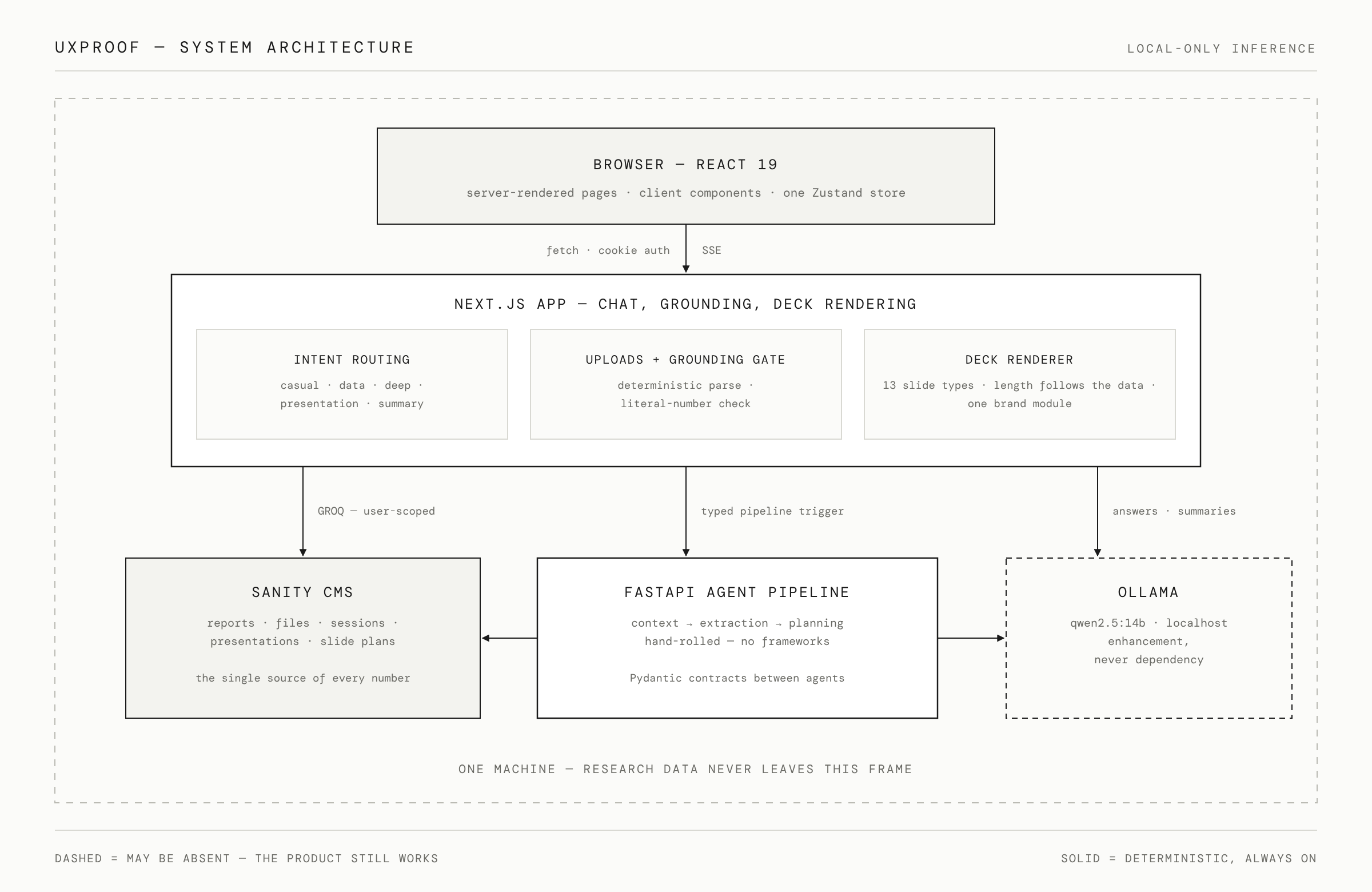
13 slide types
rendered deterministically — the model never touches the deck0 ungrounded
numbers: every figure must appear verbatim in the sourceWorks offline
every model step has a deterministic fallbackTwo systems
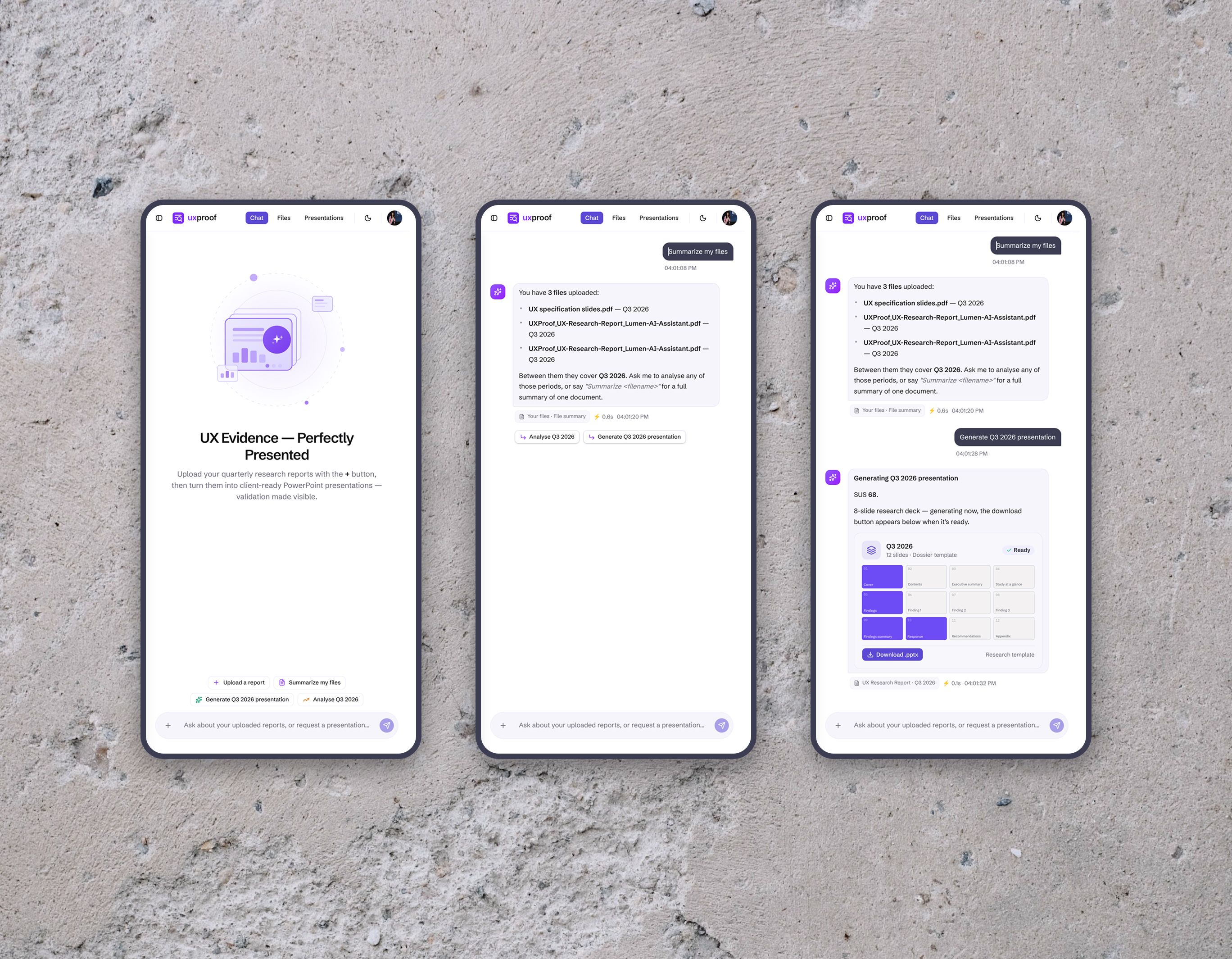
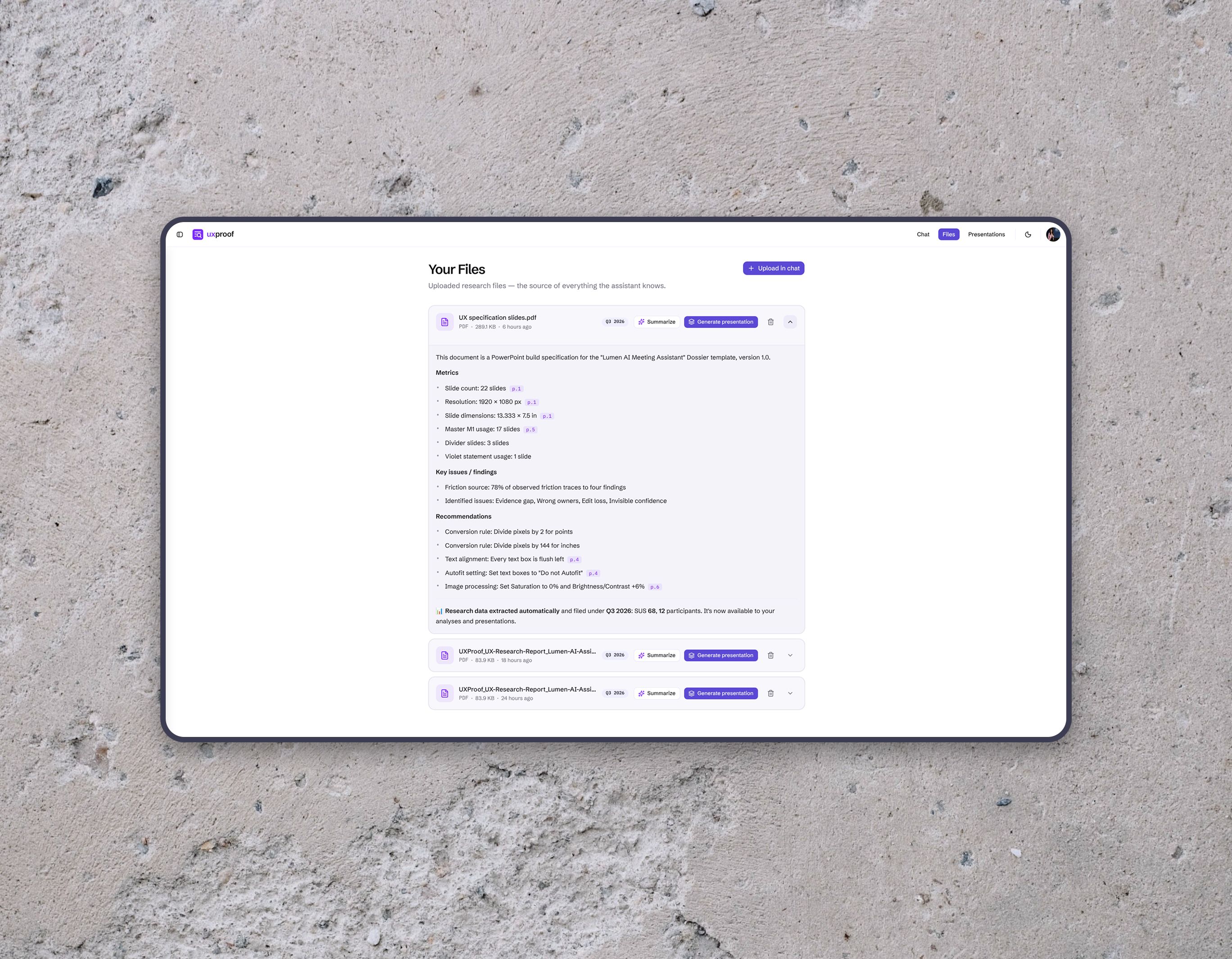
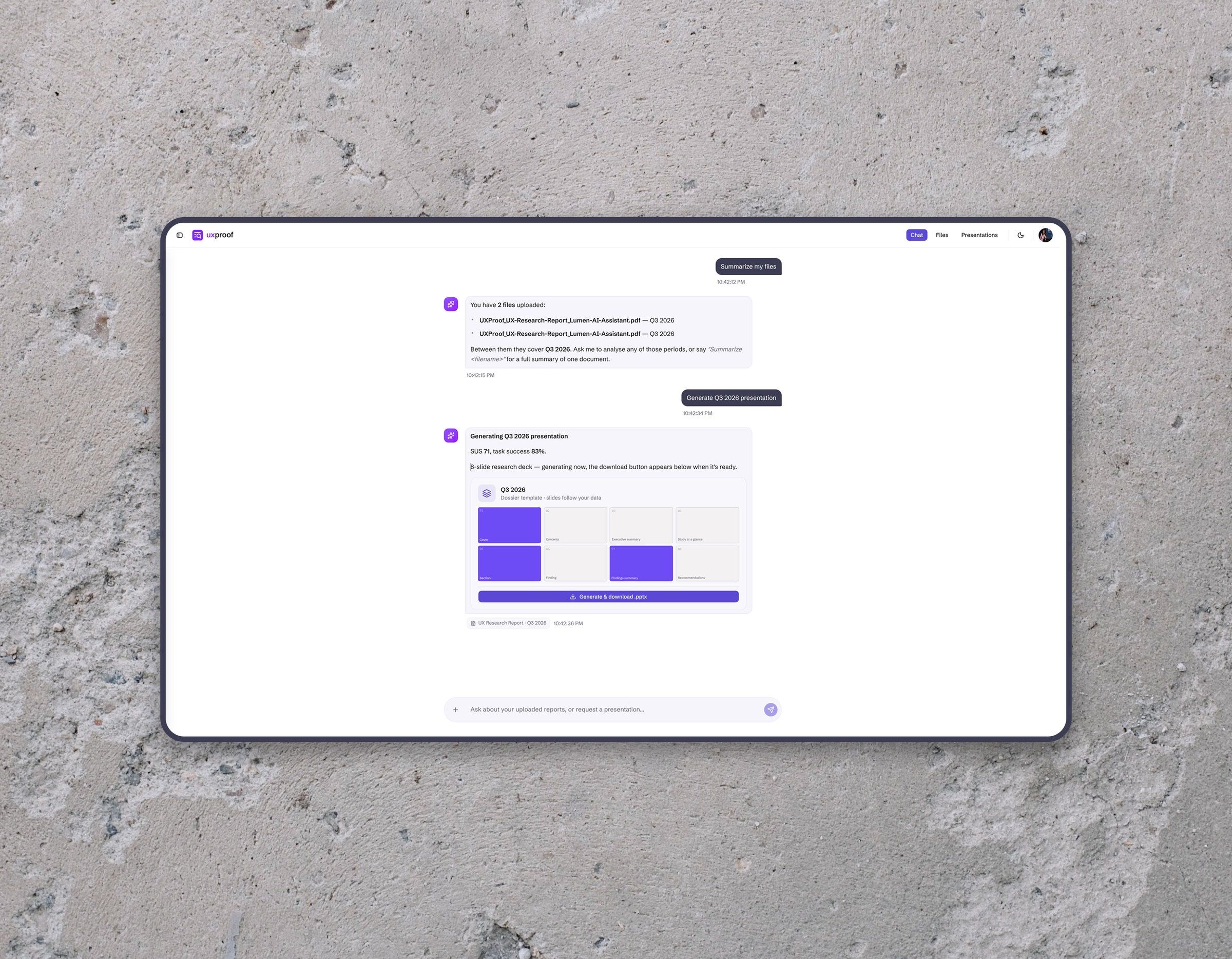
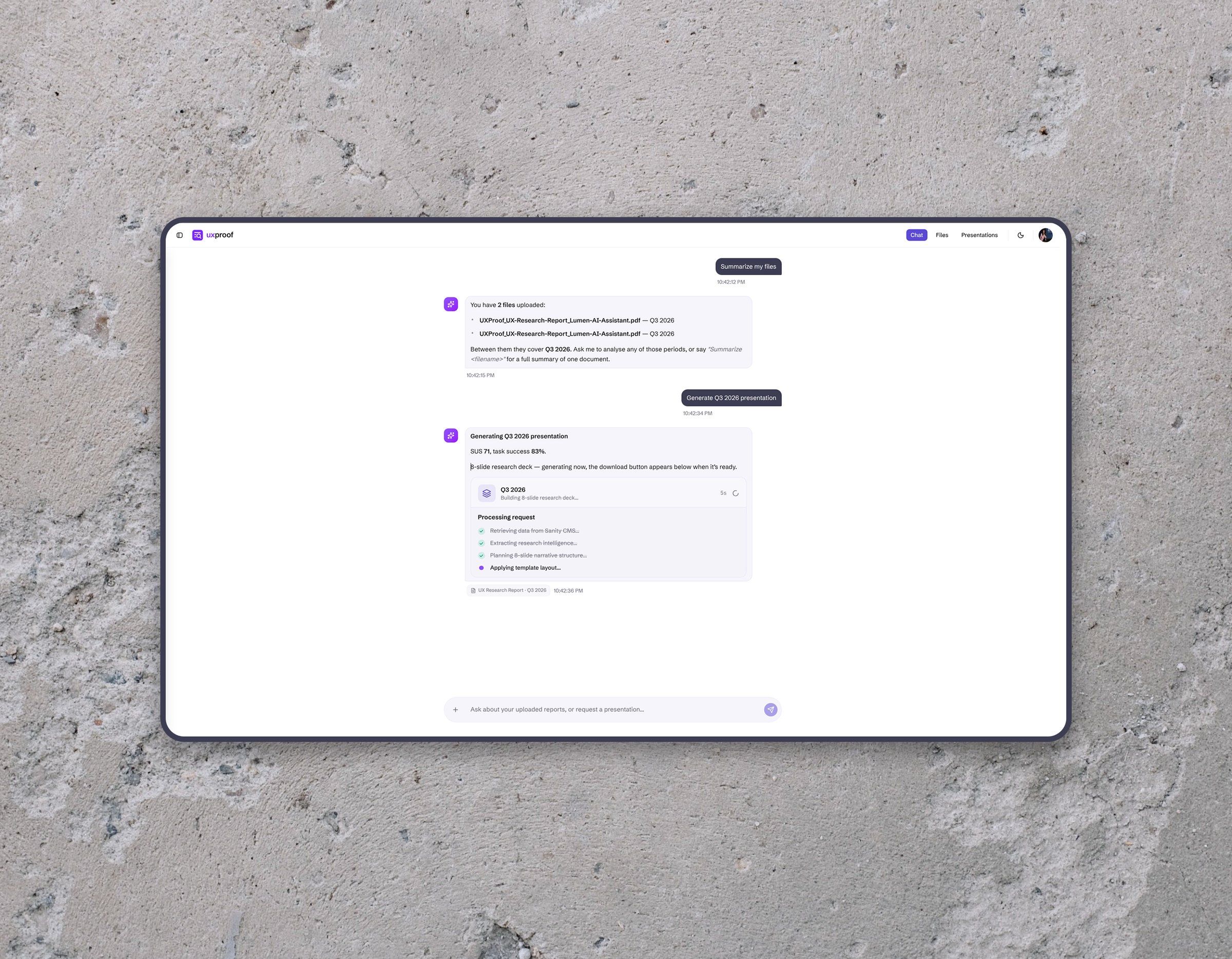
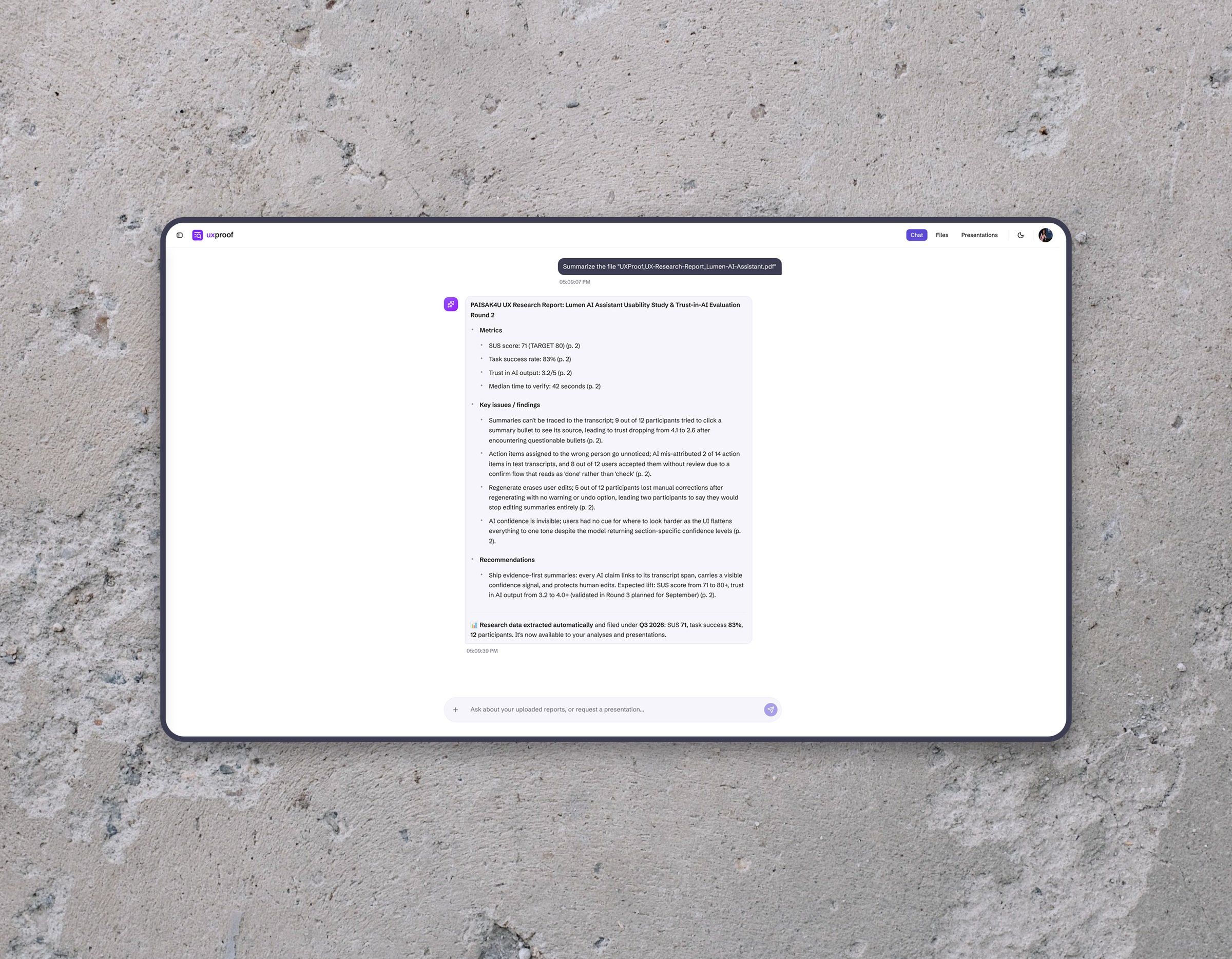
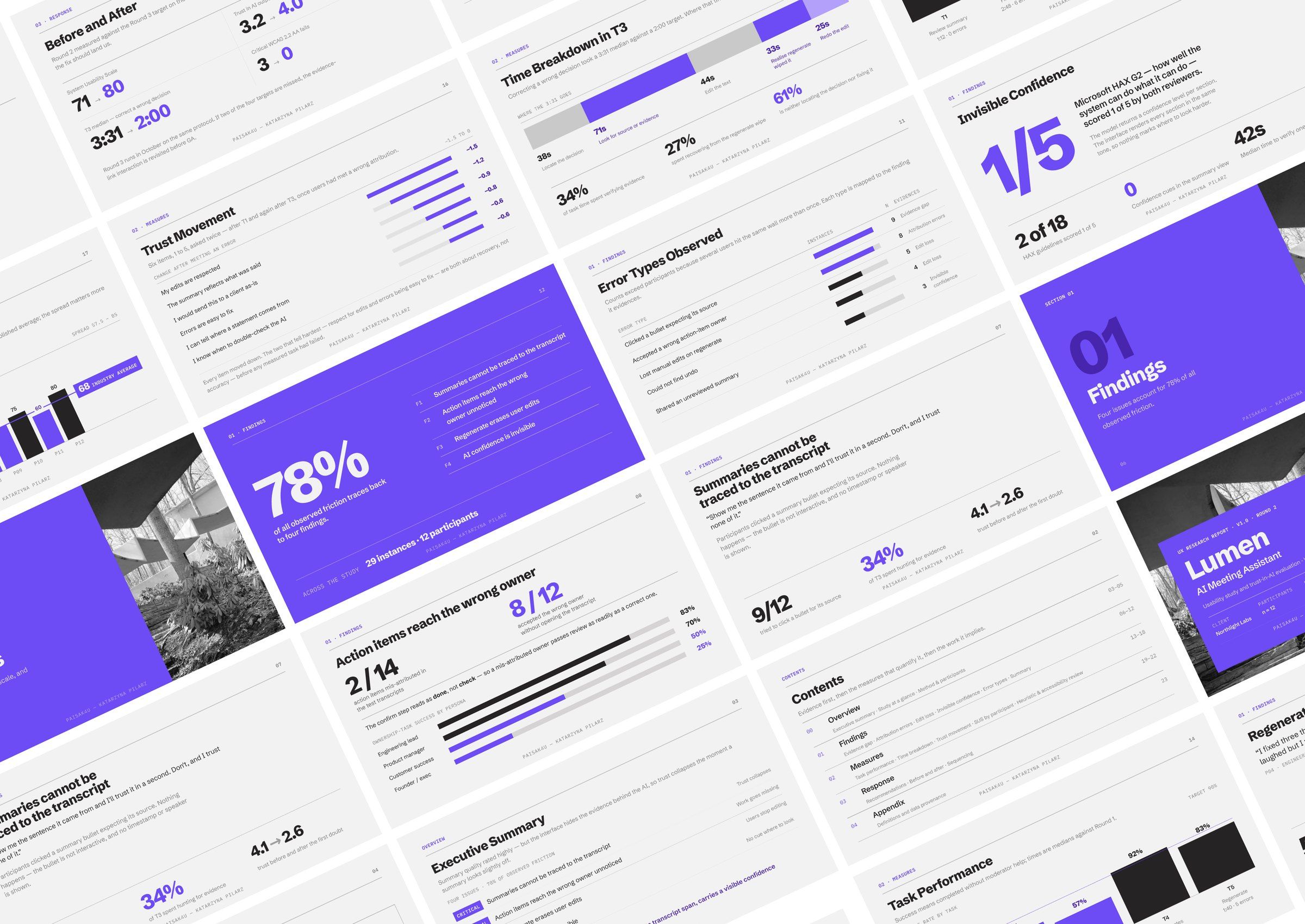
the product’s and the deck’s, kept deliberately apartuxproof turns uploaded UX research into client-ready PowerPoint decks. Ask it in plain language — “Analyse Q3 2025”, “Compare Q2 vs Q3”, “Generate the 2025 presentation” — and it answers from your own uploaded research only, then renders the deck on demand.
A self-initiated concept, designed and built end to end: the interaction model, the design system, the React and TypeScript implementation, a multi-agent generation pipeline, and the slide template the decks are drawn from.
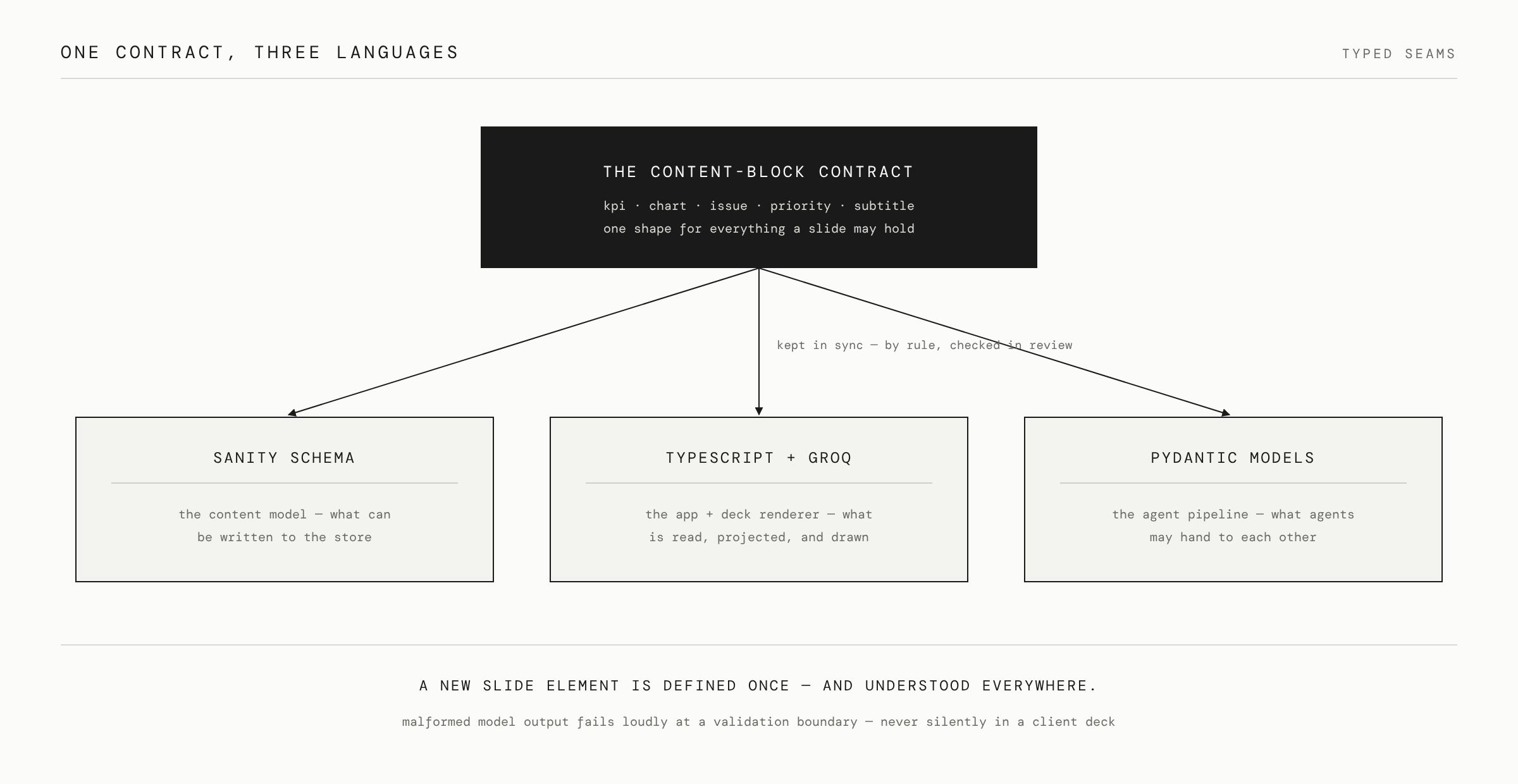
The first design artefact was not a screen — it was a boundary. The model may select which findings matter and narrate them. It may never touch the numbers, the slide structure, the styling, or whether the product works at all. Between the two sits a validation gate: every figure must appear verbatim in the source or it is dropped, and output that fails the check is discarded rather than repaired. Every model step has a deterministic fallback, so with the model switched off entirely, decks still generate.
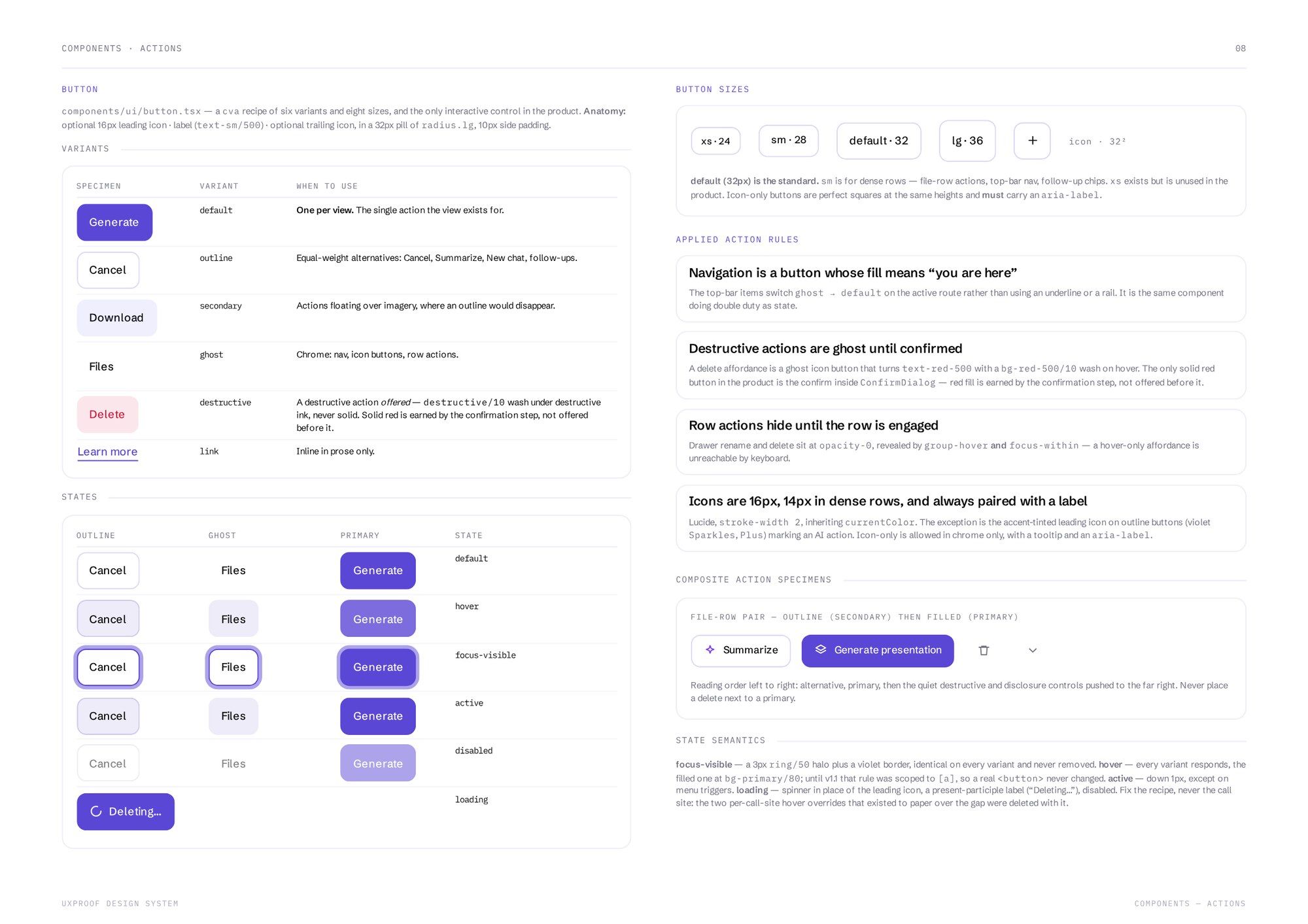
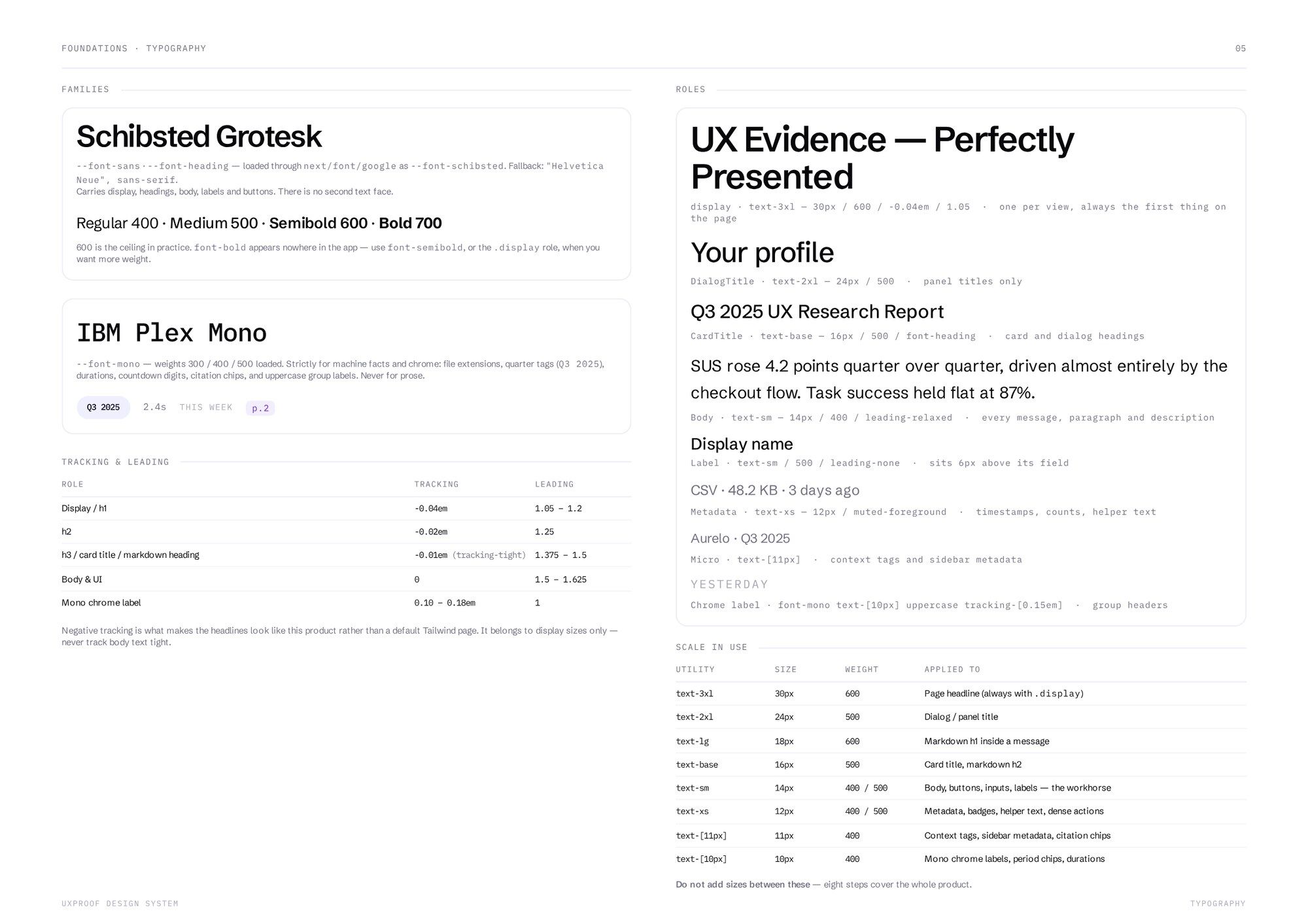
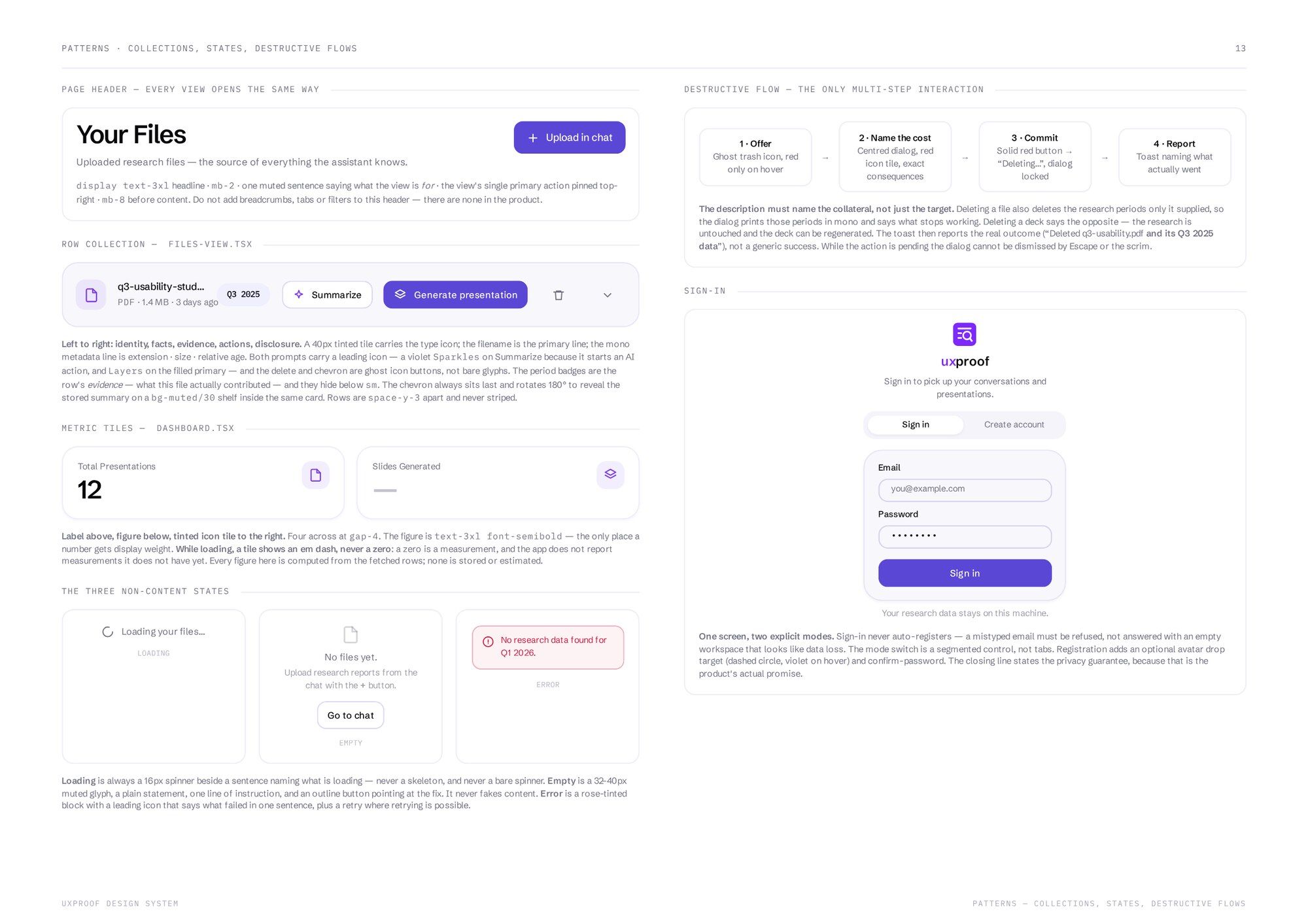
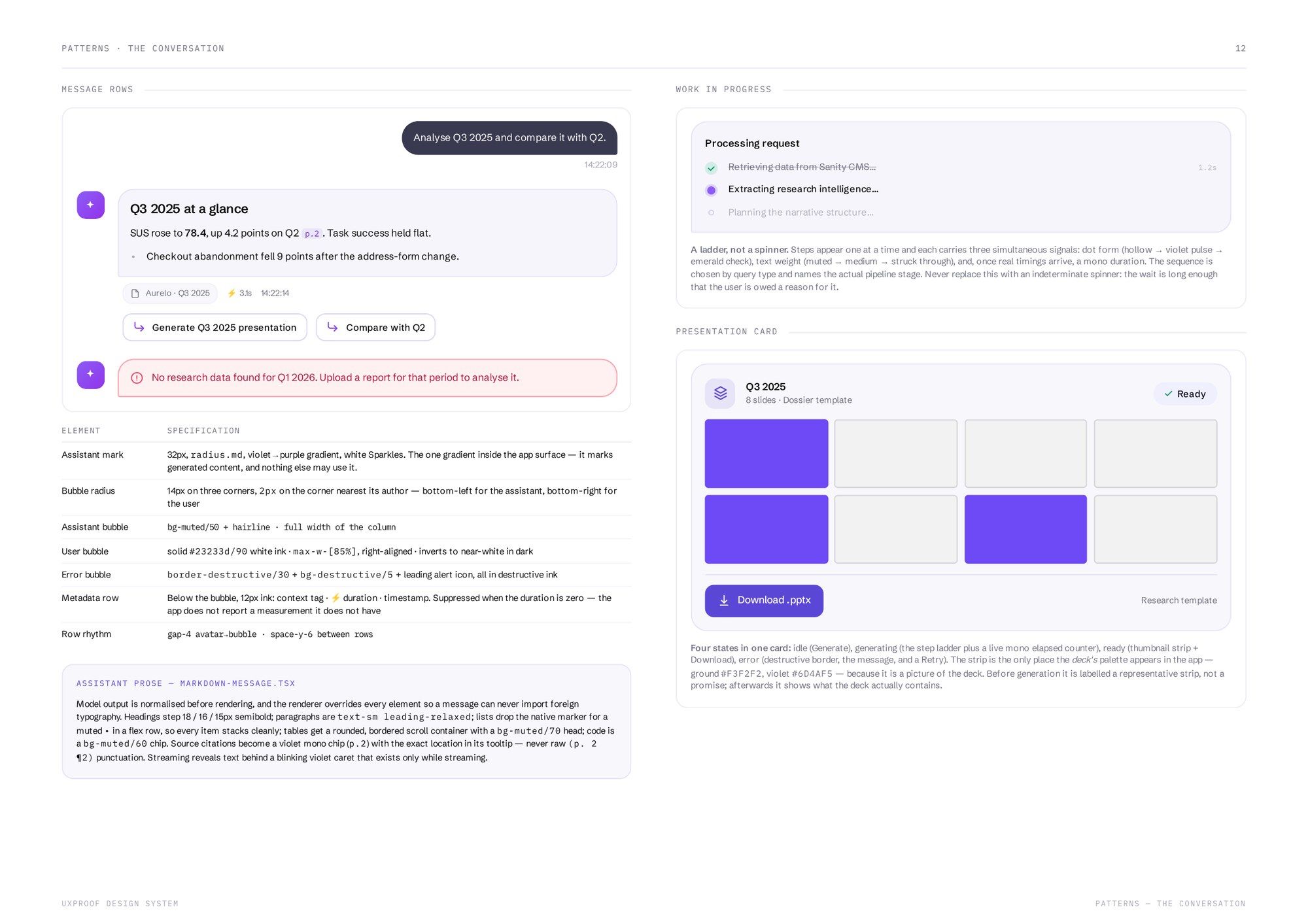
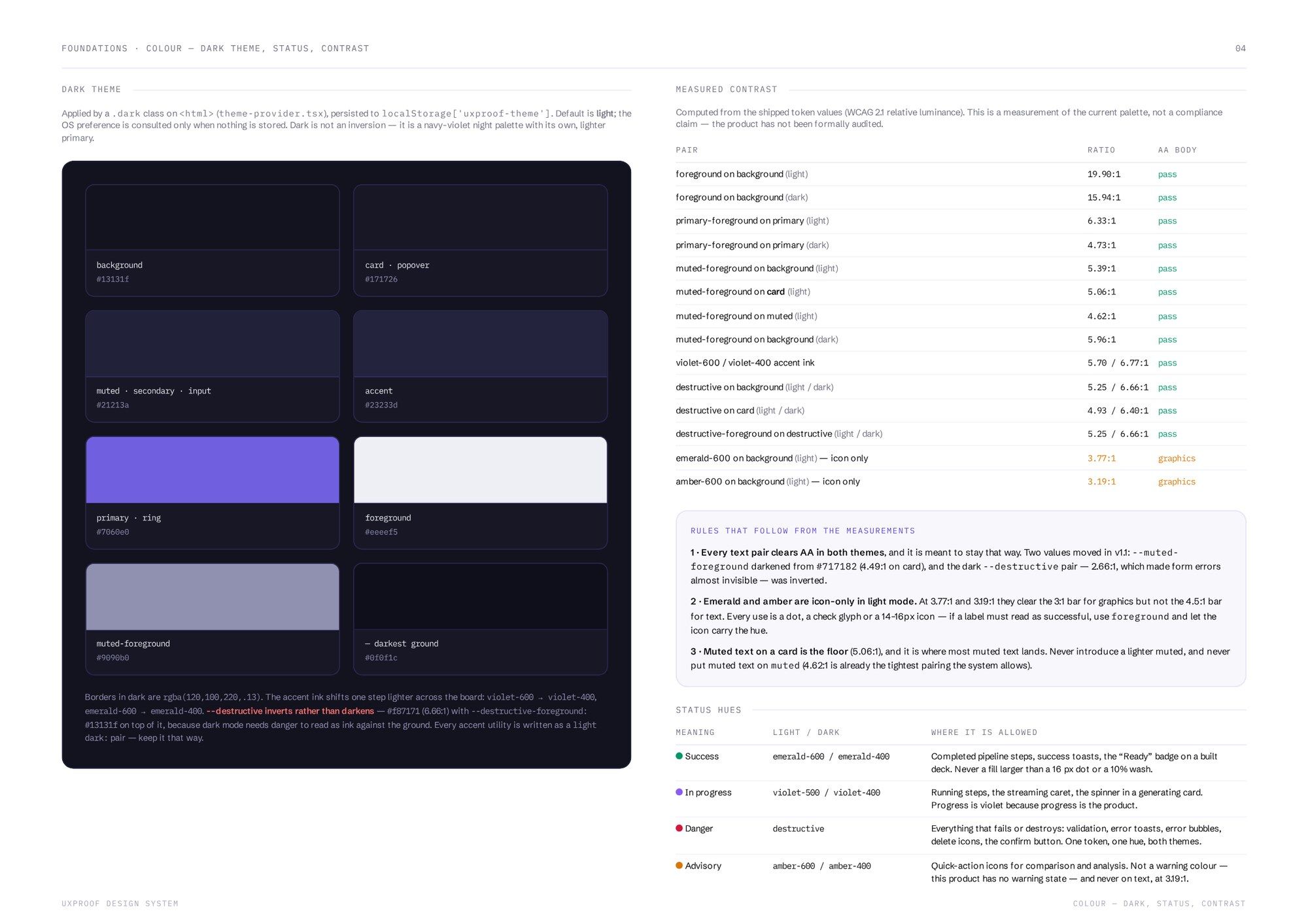
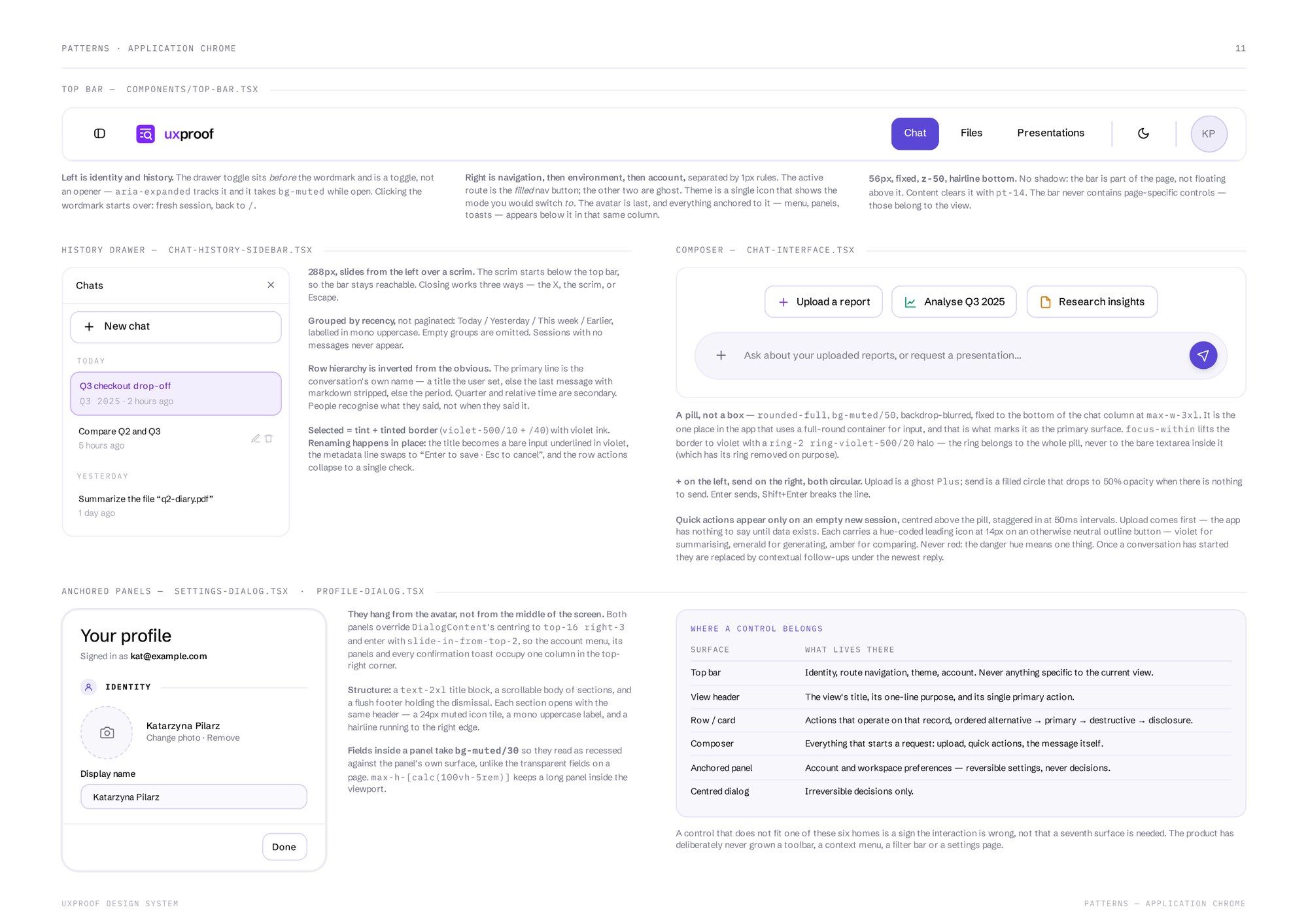
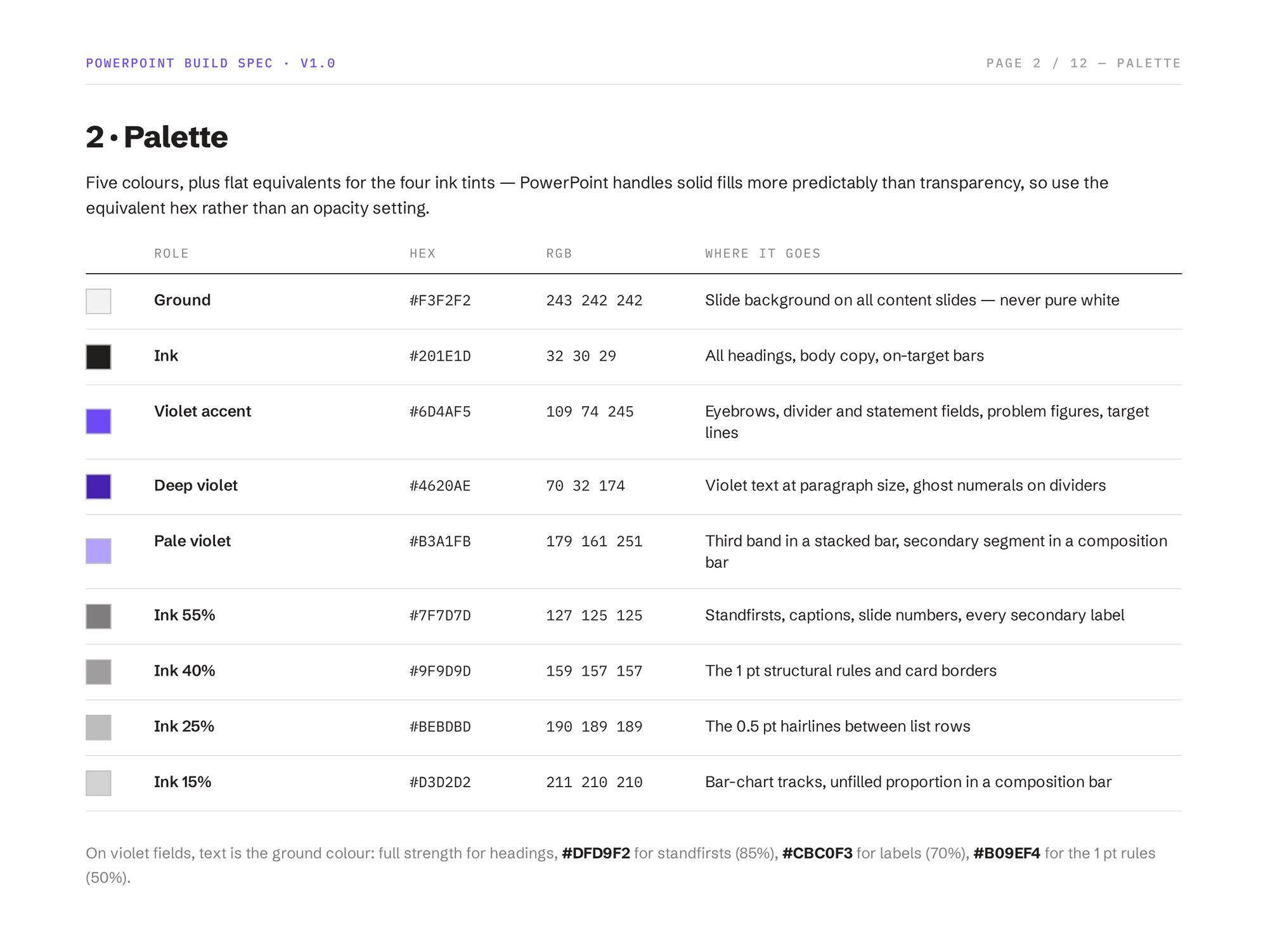
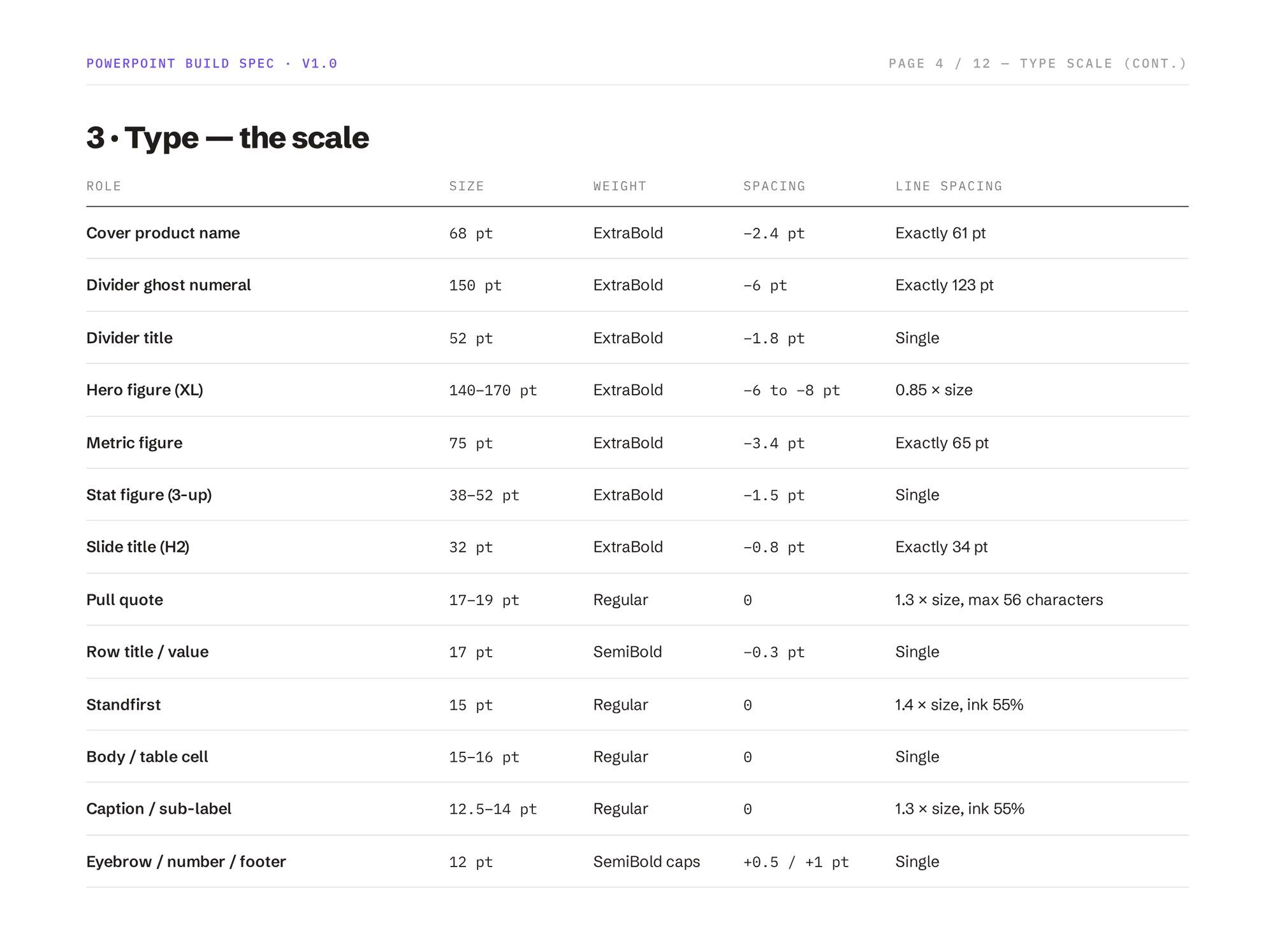
Two design systems, deliberately separate. The application’s governs behaviour as much as appearance: where a control is allowed to live, what every state has to look like, how much emphasis a single view may spend. The deck’s is stricter and narrower — fixed slide masters, one accent colour with a job to do, flat shapes, no decoration. They share two typefaces and nothing else.
A working concept rather than a commercial product — real uploads, real decks, running on my own research practice, built to demonstrate an architecture.
Produced by
PAISAK4URole
UX engineering lead for the concept — interaction design, information architecture, design system, accessibility, React implementation, AI workflow and presentation rendererScope
Concept build, designed and engineered end to end: interaction model, design system, React implementation and a multi-agent deck pipelineYear
2026Tools
Case study
View case study in detail